
A messaging security agent is an AI system that reads chat apps like Slack, Microsoft Teams, and WhatsApp in real time to catch phishing attempts, leaked credentials and social-engineering scams. It then flags, blocks, or escalates the message before it causes any further damage.
Let's explore more and understand what a messaging security agent actually is, how it works under the hood, where it fits next to the tools you already have and what it takes to build one in 2026 properly.
We've watched enough of these rollouts up close to know the hard part usually isn't the AI model, it's the judgment calls underneath it: what counts as a false positive worth tolerating, how much friction a security team is willing to add to a live conversation, and who signs off when the agent gets it wrong. That's the part of this guide worth reading closely, not just the architecture diagram.
What Is a Messaging Security Agent (MSA)?
A messaging security agent is an AI-driven system that continuously monitors, analyzes, and acts on conversations happening inside messaging platforms like Slack, Microsoft Teams, WhatsApp Business, Telegram, live chat widgets and SMS gateways - to detect and stop threats such as phishing attempts, malware links, social engineering, credential leaks, and policy violations, in real time, without waiting for a human to notice something wrong.
Unlike a traditional keyword filter or antivirus scanner bolted onto an email gateway, a messaging security agent behaves less like a static rule and more like a vigilant analyst sitting inside every conversation. It reads context, not just content. It understands that "hey, can you send me the client's card details real quick, I'm locked out" is a very different sentence depending on who's saying it, when, and what happened five messages earlier.
That contextual layer is what makes it an agent rather than a filter. It doesn't just flag a keyword, it reasons about intent, cross-references behavior patterns, and can independently decide to quarantine a message, alert a security team, or ask a follow-up verification step.
Why Messaging Apps Became the New Attack Surface for Businesses
For years, security budgets were built around a simple assumption: threats arrive by email. That assumption is now outdated.
A few things changed at once:
- Remote and hybrid work normalized chat-first communication. Teams that used to talk face-to-face now do everything approvals, credential sharing, vendor coordination inside Slack or Teams.
- Attackers automated social engineering. Generative AI lets a scammer produce a convincing, typo-free, context-aware message in seconds, in any language, mimicking a colleague's tone.
- Messaging platforms were never designed as security perimeters. Email has SPF, DKIM, DMARC, and two decades of enterprise gateway tooling. Chat apps mostly don't have an equivalent.
- Business-critical data now lives in chat threads by default. API keys, customer PII, financial approvals all pasted casually into a conversation and forgotten.
The result is that a single compromised employee account inside Slack or WhatsApp can now do more damage, faster, than a phishing email ever could because chat carries an implicit trust that email lost years ago. Nobody double-checks a message from "their manager" in a group chat the way they'd scrutinize a strange email.
How a Messaging Security Agent Works
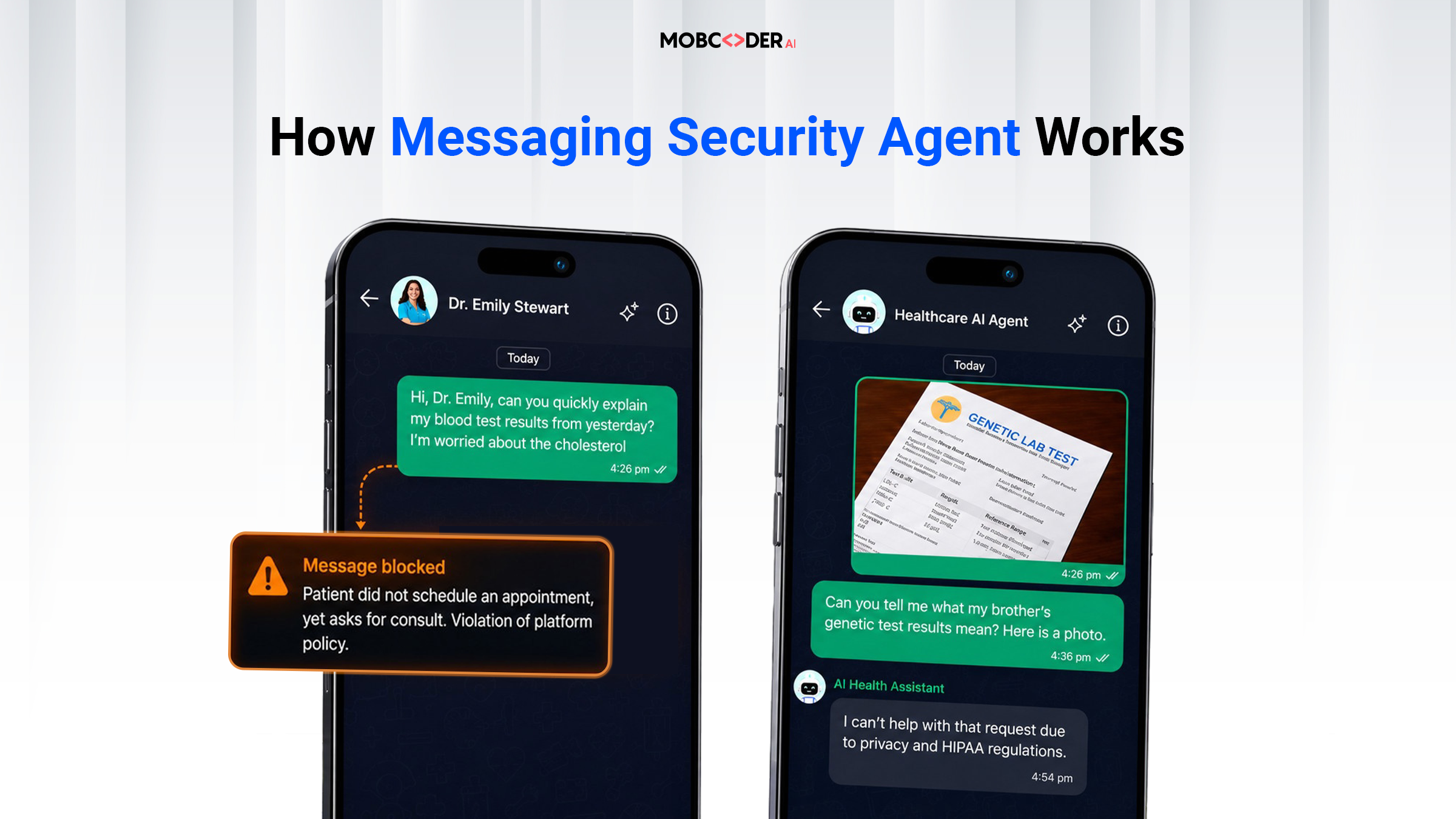
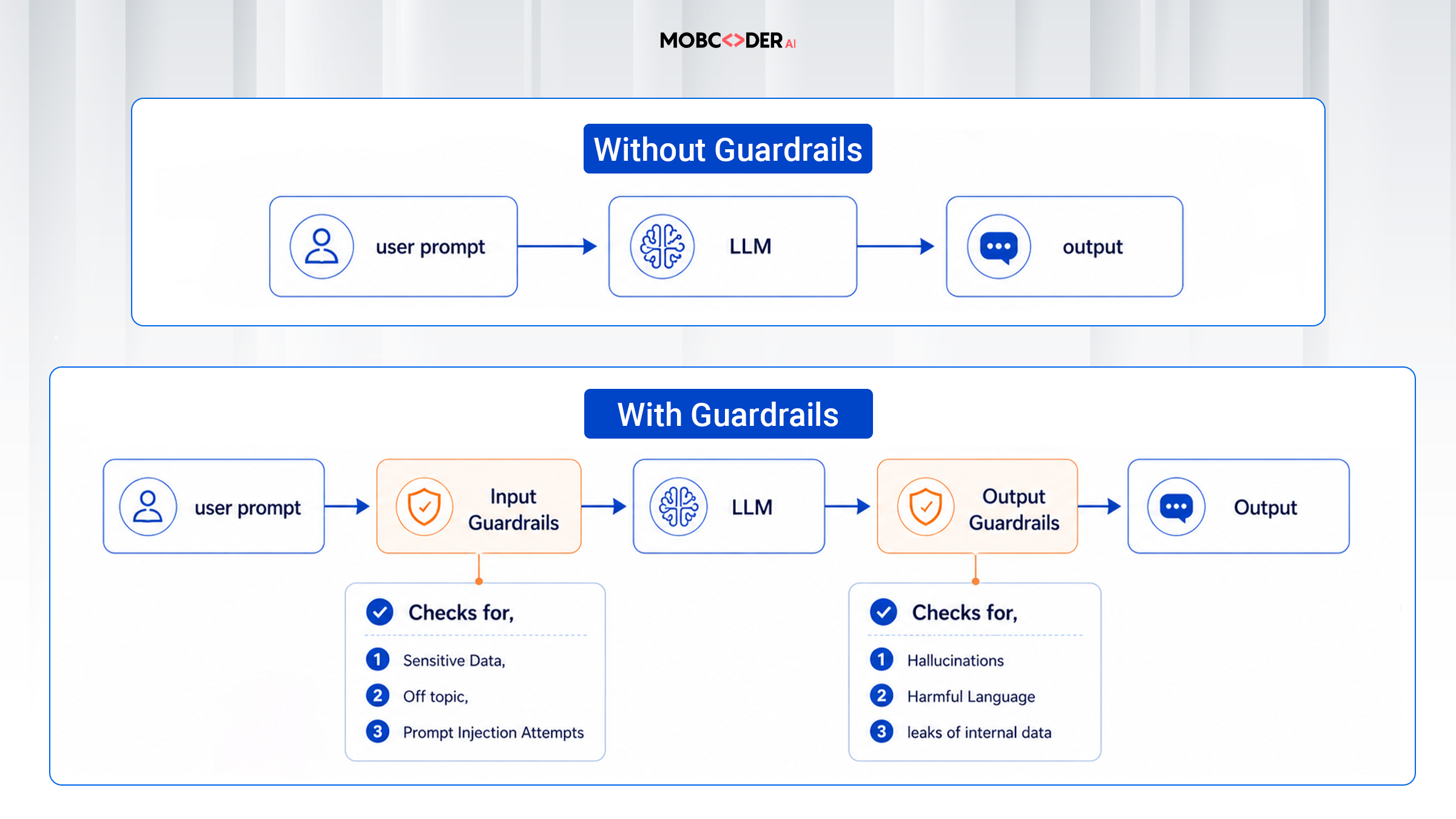
At a high level, a messaging security agent sits between the message and the recipient or watches the stream in near real time and runs it through a pipeline before deciding what happens next.
A simplified version of that pipeline looks like this:
- Ingestion the agent connects to the messaging platform via API or webhook (Slack Events API, WhatsApp Business API, Teams Graph API, etc.) and receives messages as they're sent.
- Context building pulls in metadata: sender history, channel type, time of day, prior conversation, known relationships between users.
- Threat analysis an LLM or a purpose-trained classifier scores the message for phishing intent, malicious links, PII exposure, malware attachments, and manipulation patterns (urgency, authority impersonation, financial requests).
- Decision and action based on the score and configured policy, the agent can allow, flag, redact, quarantine, or escalate the message, and log the event for audit.
- Feedback loop analyst decisions (confirmed threat vs. false positive) feed back into the model to improve accuracy over time.
Here's a stripped-down illustration of what step 3 might look like in code, using an LLM to classify an incoming message before it's delivered:
import json
from anthropic import Anthropic


client = Anthropic()


def analyze_message(message: str, sender_history: dict) -> dict:
    prompt = f"""
    You are a messaging security classifier. Analyze the message below
    and return ONLY valid JSON with these fields:
    - risk_score (0-100)
    - category (phishing, malware_link, pii_leak, social_engineering, benign)
    - reasoning (one short sentence)


    Sender history: {json.dumps(sender_history)}
    Message: "{message}"
    """


    response = client.messages.create(
        model="claude-sonnet-4-6",
        max_tokens=200,
        messages=[{"role": "user", "content": prompt}]
    )


    result = json.loads(response.content[0].text)
    return result


def route_message(message: str, sender_history: dict):
    verdict = analyze_message(message, sender_history)


    if verdict["risk_score"] >= 80:
        return "quarantine_and_alert"
    elif verdict["risk_score"] >= 40:
        return "flag_for_review"
    else:
        return "deliver"
In production, this logic is rarely this simple real systems combine an LLM's contextual reasoning with faster, cheaper classical models (regex, hash-matching against known malicious URLs, entropy checks for leaked secrets) so that the expensive AI call only runs on messages that clear an initial filter. That layered design keeps latency low enough that the agent doesn't slow down a live conversation.
Core Capabilities to Look For in a Messaging Security Agent
Not every product marketed as a "messaging security agent" does the same job. When evaluating one or building one these are the capabilities that actually matter:
- Real-time phishing and smishing detection catching credential-harvesting links and impersonation attempts as they're typed, not after the fact.
- PII and secrets detection spotting API keys, passwords, card numbers, or personal data before they're posted publicly in a channel.
- Behavioral anomaly detection noticing when an account starts messaging in a pattern that doesn't match its history (a compromised account often behaves differently before it's used maliciously).
- Cross-platform coverage Slack, Teams, WhatsApp, SMS, and in-app chat, unified under one policy engine instead of five disconnected tools.
- Explainable decisions every flag comes with a reason, not a black-box score, so security teams can audit and trust it.
- Human-in-the-loop escalation high-confidence threats can auto-block, but ambiguous ones route to a human analyst rather than silently deleting a legitimate message.
- Compliance logging an audit trail that satisfies frameworks like SOC 2, HIPAA, or GDPR, depending on the industry.
In practice, this means every flagged conversation gets written into a searchable AI chatbot conversations archive, so security teams can pull up exactly what was said, when, and why the agent reacted the way it did instead of relying on someone's memory of a chat from three weeks ago.
Where a Messaging Security Agent Falls Short
No vendor pitch mentions this part, so it's worth being direct about it. A messaging security agent is genuinely useful, but it has real limits:
- It can only see what it's connected to. If IT never wired up the contractor Slack workspace or a regional WhatsApp Business number, that channel has zero coverage - the agent's protection is only as wide as its integration map.
- It struggles with genuinely novel framing. Context-aware reasoning catches known patterns of manipulation well; a brand-new social-engineering script that doesn't resemble anything in its training or feedback data can still slip through, at least the first time.
- Loose thresholds erode trust fast. If the agent flags too many benign messages, teams start ignoring or muting its alerts within weeks - the same alert-fatigue problem that plagues traditional SIEM tools.
- It doesn't replace employee training. It's a backstop, not a substitute for people knowing not to share credentials over chat in the first place.
Messaging Security Agent vs. Traditional DLP and Antivirus Tools
This isn't a case of one replacing the other. Most mature security stacks run a messaging security agent alongside existing DLP and endpoint tools, because the agent is good at catching things that live entirely inside conversational context, the kind of manipulation a signature-based scanner was never built to see.
Real-World Use Cases
Financial services. A messaging security agent watching internal Slack channels can catch an attacker impersonating a CFO and requesting an urgent wire transfer approval, a scenario that has cost real companies millions and is almost impossible to catch with email filters alone, since the attack often happens after account compromise, inside a trusted channel.
Healthcare. Clinical staff frequently coordinate over messaging apps under time pressure. An agent that detects and redacts patient identifiers before they're posted in an unsecured channel helps organizations stay HIPAA-compliant without slowing down care teams.
Customer support platforms. Support agents handle thousands of live chats daily. A messaging security agent can flag when a "customer" is actually attempting a social engineering attack against the support rep to reset an account or extract sensitive data.
Enterprise SaaS companies. With hundreds of Slack Connect channels linking a company to external vendors and partners, a messaging security agent enforces consistent policy across every external touchpoint, not just internal ones.
The Governance Question Nobody Skips Anymore
Deploying an AI agent that reads every conversation in your company is not a purely technical decision, it's a governance one. Who defines what the agent is allowed to flag? Who reviews its false positives? What happens to the data it processes, and how long is it retained? This is really an extension of a broader truth that's become impossible to ignore: AI transformation is fundamentally a problem of governance, not just capability. The models are good enough today to do the job. The harder work is deciding, deliberately, how much autonomy to hand them, what oversight sits above them, and how decisions get audited after the fact.
Companies that skip this step tend to end up with either an agent nobody trusts (because it flags too much, too bluntly) or one that's quietly disabled after the first embarrassing false positive. The ones that get it right treat the agent's policy configuration thresholds, escalation paths, data retention as seriously as they'd treat a new compliance control, because that's functionally what it is.
How to Build or Deploy a Messaging Security Agent
For teams considering this seriously, the build path usually follows a similar arc:
- Map the messaging surface. Identify every platform where business-critical conversations happen. This is often larger than people expect once WhatsApp groups, contractor Slack channels, and support chat widgets are all counted.
- Define risk categories and policy. Decide what "unacceptable" actually means for your business: PII exposure, financial fraud attempts, malware links, or all of the above.
- Choose the detection architecture. A hybrid approach lightweight classical filters for speed, an LLM layer for contextual reasoning tends to outperform either approach alone.
- Integrate with existing security workflows. The agent should feed into whatever SIEM or incident response process already exists, not create a parallel, ignored dashboard.
- Pilot with a human-in-the-loop. Before granting full autonomous blocking, run the agent in "flag only" mode to calibrate accuracy and build trust with the security team.
- Iterate with feedback loops. Every confirmed false positive or missed threat should retrain the classifier's thresholds.
This is precisely the kind of project where specialized help pays for itself. Building a reliable messaging security agent touches natural language processing, real-time infrastructure, platform-specific API integrations, and security compliance all at once which is why most companies pursuing this bring in a partner with dedicated agentic AI development services rather than assembling it piecemeal in-house. A team experienced in AI agent development services will already have solved the harder infrastructure problems low-latency inference, multi-platform ingestion, audit logging that otherwise eat months of internal engineering time.
At Mobcoder AI, this is the kind of build we run regularly under our broader AI development services practice - taking a business's specific messaging risk profile and turning it into a working agent, rather than handing over a generic off-the-shelf filter that doesn't understand the company's actual workflows.
Make Business Messaging Safer
The next wave of messaging security agents won't just detect threats they'll increasingly act autonomously within tightly scoped guardrails: automatically rotating a leaked credential the moment it's detected in a chat, or opening a verification workflow with the sender before a suspicious financial request is ever seen by its recipient. As generative AI models get better at reasoning over long conversational context rather than single messages in isolation, agents will start catching multi-step social engineering campaigns that unfold over days, not just single malicious messages.
The companies that get ahead of this won't be the ones that bought the flashiest tool. They'll be the ones that treated messaging security as seriously as they treated email security a decade ago and built the governance to match.
Final Thoughts
Messaging apps quietly became the operational backbone of most companies, and security tooling hasn't fully caught up. A messaging security agent isn't about adding another dashboard nobody checks, it's about putting a genuinely attentive layer of reasoning between your team's conversations and the people trying to exploit them.
Done well, it's invisible on a normal day and decisive on a bad one. That's the whole point.
If you're evaluating what this would look like for your own messaging stack, Mobcoder AI team works on exactly this kind of build from initial risk mapping through to a deployed, monitored agent as part of our wider AI agent development services and AI development services work.